India’s freedom struggle was not the work of a few iconic leaders alone. While names like Mahatma Gandhi, Jawaharlal Nehru, and Subhas Chandra Bose dominate history books, thousands of lesser-known freedom fighters made immense sacrifices to secure independence. Many worked quietly behind the scenes, led regional movements, mobilized tribal communities, or challenged British rule in ways that history has often overlooked. Their contributions were equally vital in shaping India’s path to freedom.
The Forgotten Pillars of the Freedom Movement
India’s independence movement was diverse and widespread, spanning villages, forests, cities, and prisons. It involved farmers, women, tribal leaders, poets, revolutionaries, and social reformers. Many of these individuals lacked national recognition, yet their courage and commitment kept the spirit of resistance alive at the grassroots level.
Colonial records and post-independence narratives often focused on central leadership, leaving regional heroes and local movements underrepresented. Revisiting their stories helps us understand the true scale and depth of India’s struggle for freedom.
Alluri Sitarama Raju: The Tribal Revolutionary
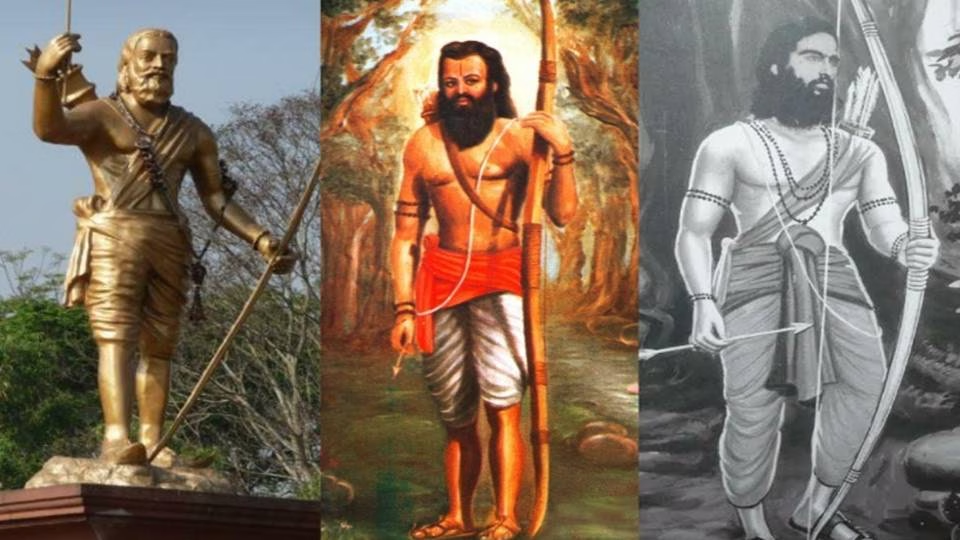
Alluri Sitarama Raju played a crucial role in mobilizing tribal communities in the forests of Andhra Pradesh during the early 20th century. He led the Rampa Rebellion against oppressive British forest laws that restricted tribal livelihoods. Raju encouraged indigenous people to resist exploitation and reclaim their rights.
Though not formally educated, his leadership skills and deep understanding of local traditions made him a powerful symbol of resistance. He was eventually captured and executed by the British, but his rebellion inspired future movements against colonial exploitation.
Matangini Hazra: The Fearless Woman of Bengal
Matangini Hazra was a courageous freedom fighter from Bengal who actively participated in the Quit India Movement of 1942. Despite being over 70 years old, she led protests against British rule, carrying the national flag and chanting patriotic slogans.
During a demonstration, British police opened fire on protesters. Even after being shot multiple times, Matangini Hazra continued marching until she collapsed. Her sacrifice became a symbol of women’s strength and determination in the freedom struggle, though her name remains largely unknown outside regional history.
Birsa Munda: Voice of Tribal Resistance
Birsa Munda emerged as a powerful tribal leader in present-day Jharkhand in the late 19th century. He opposed British land policies and the exploitation by landlords and missionaries. Birsa mobilized tribal communities, advocating for social reform and self-rule.
Though his movement preceded the mainstream national struggle, it laid the foundation for tribal resistance against colonial authority. Birsa Munda died at a young age in British custody, but his legacy lives on as a symbol of indigenous resistance and identity.
Aruna Asaf Ali: The Woman Who Defied the Empire
Aruna Asaf Ali is often remembered briefly in textbooks, but her contribution was far more significant. During the Quit India Movement, she hoisted the Indian national flag at the Gowalia Tank Maidan in Bombay, defying British authority at a critical moment.
She continued working underground, evading arrest and inspiring countless Indians during a time when many leaders were imprisoned. Her courage and leadership helped sustain the movement during one of its most challenging phases.
Bagha Jatin: The Revolutionary Strategist
Bagha Jatin, also known as Jatindranath Mukherjee, was a revolutionary leader who advocated armed resistance to British rule. He played a key role in organizing underground revolutionary networks in Bengal and Odisha.
Known for his strategic brilliance and bravery, Bagha Jatin fought British forces until his death in a dramatic encounter. Although his methods differed from those of nonviolent movements, his actions reflected the diversity of strategies that contributed to India’s independence.
Usha Mehta: The Voice of the Underground Radio
Usha Mehta was a young freedom fighter who operated an underground radio station during the Quit India Movement. At a time when the British tightly controlled information, her radio broadcasts spread messages of resistance and updates on the movement across India.
Her work helped maintain communication between leaders and the public during mass arrests. She was eventually arrested and imprisoned, but her efforts demonstrated how innovation and courage played vital roles in the freedom struggle.
Why These Stories Matter Today
The stories of lesser-known freedom fighters remind us that India’s independence was a collective achievement. It was built on countless sacrifices made by ordinary people who believed in freedom, justice, and self-respect. Their struggles highlight regional diversity, grassroots activism, and the participation of women and tribal communities.
Remembering these heroes also helps challenge a simplified version of history. It encourages a deeper understanding of how resistance took many forms—peaceful protests, armed rebellion, social reform, and cultural revival—all of which contributed to the same goal.
Conclusion
India’s freedom was not won by a few celebrated leaders alone but by millions of unsung heroes who fought bravely in their own ways. Lesser-known freedom fighters like Alluri Sitarama Raju, Matangini Hazra, Birsa Munda, and Usha Mehta played indispensable roles in shaping the nation’s destiny.
Honoring their contributions is not just about correcting historical records—it is about recognizing the power of collective action and the enduring spirit of resistance. By remembering these forgotten heroes, we preserve the true legacy of India’s independence and pass on their inspiration to future generations.