Nature is breathtaking, powerful, and unforgiving. While it gives life, it can also take it away without warning. Across the planet, there are places so extreme, volatile, or hostile that survival becomes a constant gamble. These locations aren’t dangerous because of villains or weapons—but because nature itself sets the rules.
Here are some of the most dangerous places in nature, where beauty and peril exist side by side.
1. Death Valley, USA
Death Valley is one of the hottest places on Earth, with temperatures regularly exceeding 120°F (49°C). The extreme heat can overwhelm the human body within hours, leading to dehydration, heatstroke, and organ failure.
Despite its name, the landscape is stunning—salt flats, colorful rock formations, and vast open skies. But underestimate it, and it becomes deadly. Even experienced hikers must plan carefully or risk fatal consequences.
2. Mount Everest’s “Death Zone.”
Above 26,000 feet lies the Death Zone, where oxygen levels are insufficient to sustain human life for long periods. Climbers experience hallucinations, impaired judgment, and extreme fatigue.
Bodies of fallen climbers remain frozen in place, serving as grim landmarks. At this altitude, rescue is often impossible. The mountain doesn’t care about experience or ambition—it demands respect.
3. The Danakil Depression, Ethiopia
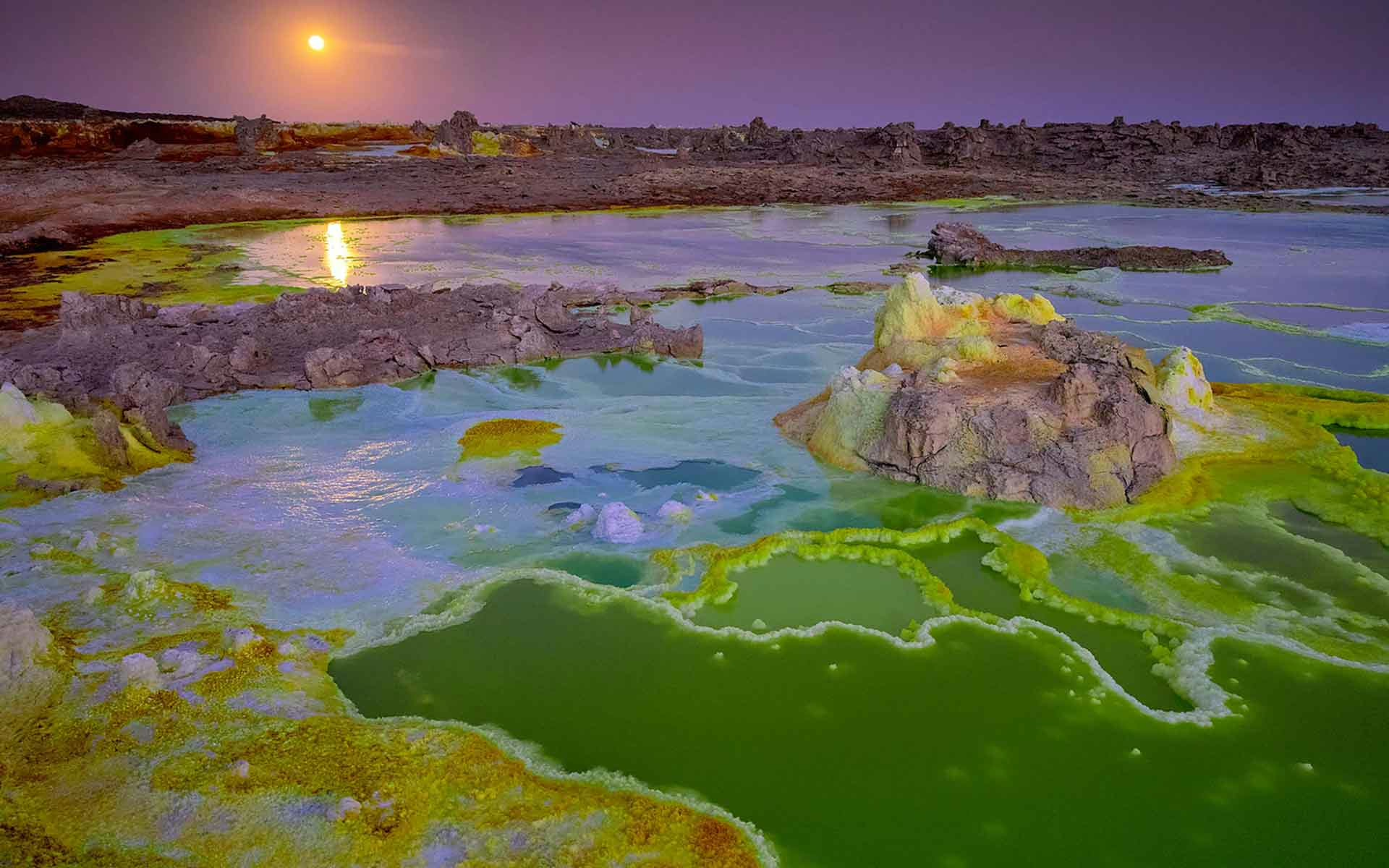
This otherworldly landscape features bubbling lava lakes, acidic pools, and temperatures that regularly exceed 100°F (38°C). Toxic gases rise from the ground, and earthquakes are common.
It’s one of the hottest inhabited regions on Earth and one of the most geologically unstable. The scenery looks alien—but the danger is very real.
4. Lake Natron, Tanzania
Lake Natron appears calm and beautiful, but its waters are extremely alkaline, with a pH comparable to ammonia. Animals that fall into the lake can be burned by its corrosive water.
The lake is infamous for calcifying animals, preserving them in eerie, statue-like forms. What looks peaceful from afar is lethal up close.
5. Snake Island, Brazil
Officially called Ilha da Queimada Grande, Snake Island is home to one of the highest concentrations of venomous snakes in the world. The golden lancehead viper found here has venom capable of killing a human in under an hour.
The Brazilian government has banned public access, and for good reason. A single misstep could be fatal.
6. The Australian Outback
The Outback’s vastness is its greatest danger. Temperatures soar, water is scarce, and distances are deceptive. Many who underestimate it become lost and succumb to dehydration.
Add venomous snakes, spiders, and unpredictable weather, and the Outback becomes a test of endurance few are prepared for.
7. Antarctica
Antarctica is the coldest, driest, and windiest continent on Earth. Frostbite can occur within minutes, and storms can appear without warning.
Isolation adds another layer of danger—medical emergencies are extremely difficult to manage. Survival here depends entirely on preparation and teamwork.
8. The Amazon Rainforest
Despite being full of life, the Amazon is one of the most dangerous ecosystems on Earth. Poisonous animals, deadly plants, extreme humidity, and disease-carrying insects pose constant threats.
Navigation is difficult, food sources can be deceptive, and survival knowledge is essential. Nature thrives here—but humans are outsiders.
9. The Bermuda Triangle
Located in the North Atlantic, this region has long been associated with mysterious disappearances. While many claims are exaggerated, the area is known for sudden storms, powerful currents, and complex navigation challenges.
Nature—not the supernatural—makes this area dangerous.
10. The Valley of Death, Russia
Also known as the Valley of Geysers’ nearby toxic zones, this area contains deadly volcanic gases that displace oxygen. Animals often collapse and die within minutes of exposure.
Humans who linger too long risk suffocation without warning signs.
Why These Places Exist
These locations remind us that Earth is not designed for comfort—it’s designed for balance. Extreme environments regulate climate, shape ecosystems, and maintain geological stability.
Danger is not a flaw of nature. It’s part of its power.
Final Thought
The most dangerous places in nature aren’t evil or malicious. They are simply places where human limits are exposed.
We are adaptable—but not invincible.
To respect nature is to understand that survival is not guaranteed, beauty often comes with risk, and the wild does not bend to human desire.
Sometimes, the most powerful reminder of being alive is standing on the edge of what could destroy us—and choosing to respect it from a safe distance.