Social media has transformed the way people communicate, consume information, and engage with politics. Platforms such as Facebook, X (formerly Twitter), Instagram, YouTube, and WhatsApp have become powerful tools for political expression and influence. In the modern world, political opinions are no longer shaped solely by traditional media, educational institutions, or personal experiences. Instead, social media plays a central role in how individuals form, reinforce, and express their political beliefs.
The Rise of Digital Political Discourse
In the past, political information was largely controlled by newspapers, television, and radio. Today, social media has democratized political discourse by giving every individual a voice. Anyone with an internet connection can share opinions, comment on policies, and engage in debates. This shift has increased political participation, particularly among younger generations who may not engage with traditional media.
Social media platforms allow political content to spread rapidly, often reaching millions within minutes. Political speeches, protests, and breaking news are now shared in real time, shaping public perception almost instantly. This immediacy has changed how people respond to political events, making opinions more reactive and emotionally driven.
Influence of Algorithms and Echo Chambers
One of the most significant ways social media shapes political opinions is through algorithms. These algorithms are designed to show users content that aligns with their interests and past behavior. While this personalization improves user engagement, it also creates echo chambers—digital spaces in which individuals are primarily exposed to views similar to their own.
Echo chambers reinforce existing beliefs and limit exposure to opposing perspectives. Over time, this can increase political polarization, making compromise and constructive dialogue more difficult. People may come to view their political opinions as universally accepted while dismissing alternative viewpoints as misinformed or hostile.
The Power of Virality and Emotional Content
Political content that evokes strong emotions—such as anger, fear, or pride—tends to perform better on social media. Short videos, memes, and sensational headlines often gain more traction than nuanced discussions. This emphasis on virality can oversimplify complex political issues and encourage emotional reactions rather than critical thinking.
Political narratives spread through likes, shares, and comments, often without fact-checking. A misleading post can influence public opinion before corrections or clarifications are widely seen. As a result, public discourse can become distorted, shaping opinions based on partial or inaccurate information.
Misinformation and Fake News
The spread of misinformation is one of the biggest challenges in the digital political landscape. Social media facilitates the rapid circulation of false or misleading content, particularly during elections or political crises. Fake news, manipulated images, and out-of-context videos can mislead users and influence their political beliefs.
Many users struggle to distinguish credible sources from unreliable information. When misinformation aligns with personal beliefs, individuals are more likely to accept and share it without verification. This undermines trust in democratic institutions and creates confusion among voters.
Social Media as a Tool for Political Mobilization
Despite its challenges, social media has also played a positive role in political engagement. It has become a powerful tool for mobilizing people, organizing protests, and raising awareness about social and political issues. Grassroots movements often rely on social media to reach supporters, coordinate actions, and amplify marginalized voices.
Hashtag campaigns and online activism have brought global attention to issues such as social justice, environmental protection, and human rights. For many citizens, social media serves as an entry point into political participation, fostering discussion and civic engagement.
Influence of Political Leaders and Influencers
Political leaders increasingly use social media to communicate directly with the public, bypassing traditional media filters. This direct communication allows leaders to shape narratives, respond to criticism, and build personal connections with followers. However, it also raises concerns about accountability and the spread of unverified claims.
In addition to politicians, social media influencers play a growing role in shaping political opinions. Influencers with large followings can sway public sentiment, especially among younger audiences who trust peer voices more than formal institutions. Their opinions, endorsements, or criticisms can significantly impact political attitudes.
Impact on Youth and First-Time Voters
Young people are among the most active social media users, making them particularly influenced by online political content. For many first-time voters, social media is the primary source of political information. While this increases political awareness, it also exposes young users to misinformation and biased narratives.
Digital literacy and critical thinking skills are essential for young citizens to navigate political content responsibly. Without these skills, social media can shape opinions based more on popularity than accuracy.
The Need for Responsible Digital Citizenship
As social media continues to influence political opinions, the responsibility lies with both platforms and users. Platforms must improve content moderation, transparency, and fact-checking mechanisms. At the same time, users must practice responsible digital behavior by verifying information, engaging respectfully, and being open to diverse perspectives.
Educational institutions and governments also have a role in promoting media literacy, helping citizens understand how algorithms work and how to identify credible sources.
Conclusion
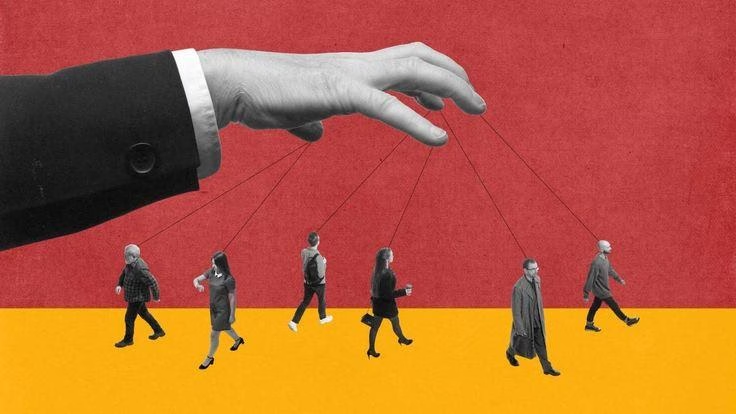
Social media has become one of the most powerful forces shaping modern political opinions. It has expanded access to political information, increased participation, and amplified diverse voices. However, it has also contributed to polarization, misinformation, and emotional manipulation.
In a digital-first world, understanding the influence of social media on political thinking is essential to the health of democracies. By promoting critical thinking, responsible engagement, and ethical platform practices, society can harness the benefits of social media while minimizing its risks.